



Ahmedabad
(Head Office)Address : 506, 3rd EYE THREE (III), Opp. Induben Khakhrawala, Girish Cold Drink Cross Road, CG Road, Navrangpura, Ahmedabad, 380009.
Mobile : 8469231587 / 9586028957
Telephone : 079-40098991
E-mail: dics.upsc@gmail.com

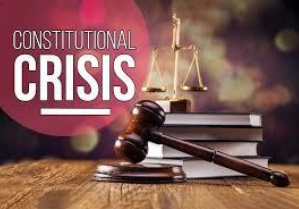
The Lok Sabha has initiated a debate on a resolution seeking the removal of the Speaker, a rare parliamentary event that tests the constitutional safeguards of the Chair\'s neutrality. While the Opposition frames the motion as a necessity to \'protect the Constitution\' and ensure non-partisan conduct, the Treasury benches view it as an institutional attack. The proceedings underscore the delicate balance of power within the lower house and the rigid legal protocols governing the removal of one of India\'s highest constitutional functionaries. • Constitutional Mandate for Removal: Under Article 94(c) of the Constitution, a Speaker may be removed from office by a resolution of the Lok Sabha passed by a \'majority of all the then members of the House\' (Effective Majority). This process requires a mandatory 14-day notice period before the resolution can be moved, ensuring the Chair has sufficient time to prepare a defense. • Admissibility and Leave of the House: A resolution for removal is not automatically debated. Under the Rules of Procedure and Conduct of Business in Lok Sabha, specifically Rule 200, the member who has given notice must move for \'leave of the House.\' The motion is admitted only if at least 50 members rise in their seats in support of the leave. • Rights of the Speaker during Proceedings: When a resolution for removal is under consideration, the Speaker cannot preside over the sitting of the House, as per Article 96(1). However, Article 96(2) grants the Speaker the right to speak and participate in the proceedings. Crucially, the Speaker can vote in the first instance on such a resolution but cannot exercise a casting vote in the case of an equality of votes. • Presiding Authority during the Debate: Since the Speaker and Deputy Speaker are barred from presiding during their own removal proceedings, a member from the Panel of Chairpersons typically takes the Chair. This has sparked procedural debates regarding the perceived neutrality of a chairperson who was originally nominated to the panel by the very Speaker under scrutiny. • Grounds for Removal: Unlike the President or Judges of the Supreme Court, the Constitution does not specify \'proved misbehaviour\' or \'incapacity\' as grounds for the Speaker\'s removal. This leaves the grounds open to political and administrative interpretation, often centering on the \'loss of confidence\' or \'failure to maintain neutrality\' as seen in the current resolution. • The \'Effective Majority\' Requirement: To succeed, the resolution must be passed by a majority of the current strength of the House (Total strength minus vacancies). This is a higher threshold than a \'Simple Majority,\' reflecting the intent of the framers to protect the Speaker from arbitrary removal by a thin or fluctuating majority. Key Definitions • Effective Majority: A majority of the \'then members\' of the House, calculated as: $(Total Strength - Vacancies)/2 + 1$. • Casting Vote: The deciding vote cast by the presiding officer only in the event of a tie. Under Article 96, the Speaker loses this privilege during their own removal debate. • Point of Order: A query raised by a member who believes that the rules of the House or a section of the Constitution have been neglected or violated during proceedings. Constitutional & Legal Provisions • Article 93: Provides for the election of the Speaker and Deputy Speaker of the Lok Sabha. • Article 94: Details the vacation, resignation, and removal from the offices of Speaker and Deputy Speaker. • Article 96: Explicitly states that the Speaker or Deputy Speaker shall not preside while a resolution for their removal is under consideration. • Rule 200-203 (Lok Sabha Rules): Prescribes the detailed parliamentary procedure for the removal of the Speaker. Conclusion The resolution against the Speaker is a significant constitutional moment that highlights the tensions between executive dominance and legislative oversight. While the office of the Speaker is intended to be above party politics, the current debate reflects the evolving challenges to parliamentary decorum. The outcome of the vote will not only decide the fate of the incumbent but will also set a precedent for how the \'neutrality of the Chair\' is interpreted and defended in a polarized political landscape. UPSC Relevance • GS Paper II: Indian Constitution—historical underpinnings, evolution, features, amendments, and significant provisions; Role of the Speaker; Parliament and State Legislatures—structure, functioning, and conduct of business. • Prelims Focus: Majority required for removal (Effective vs. Simple), Article 94 and 96, the 14-day notice period, and the Speaker\'s right to vote in the first instance.


Address : 506, 3rd EYE THREE (III), Opp. Induben Khakhrawala, Girish Cold Drink Cross Road, CG Road, Navrangpura, Ahmedabad, 380009.
Mobile : 8469231587 / 9586028957
Telephone : 079-40098991
E-mail: dics.upsc@gmail.com
Address: A-306, The Landmark, Urjanagar-1, Opp. Spicy Street, Kudasan – Por Road, Kudasan, Gandhinagar – 382421
Mobile : 9723832444 / 9723932444
E-mail: dics.gnagar@gmail.com
Address: 2nd Floor, 9 Shivali Society, L&T Circle, opp. Ratri Bazar, Karelibaugh, Vadodara, 390018
Mobile : 9725692037 / 9725692054
E-mail: dics.vadodara@gmail.com
Address: 403, Raj Victoria, Opp. Pal Walkway, Near Galaxy Circle, Pal, Surat-394510
Mobile : 8401031583 / 8401031587
E-mail: dics.surat@gmail.com
Address: 303,305 K 158 Complex Above Magson, Sindhubhavan Road Ahmedabad-380059
Mobile : 9974751177 / 8469231587
E-mail: dicssbr@gmail.com
Address: 57/17, 2nd Floor, Old Rajinder Nagar Market, Bada Bazaar Marg, Delhi-60
Mobile : 9104830862 / 9104830865
E-mail: dics.newdelhi@gmail.com