



Ahmedabad
(Head Office)Address : 506, 3rd EYE THREE (III), Opp. Induben Khakhrawala, Girish Cold Drink Cross Road, CG Road, Navrangpura, Ahmedabad, 380009.
Mobile : 8469231587 / 9586028957
Telephone : 079-40098991
E-mail: dics.upsc@gmail.com

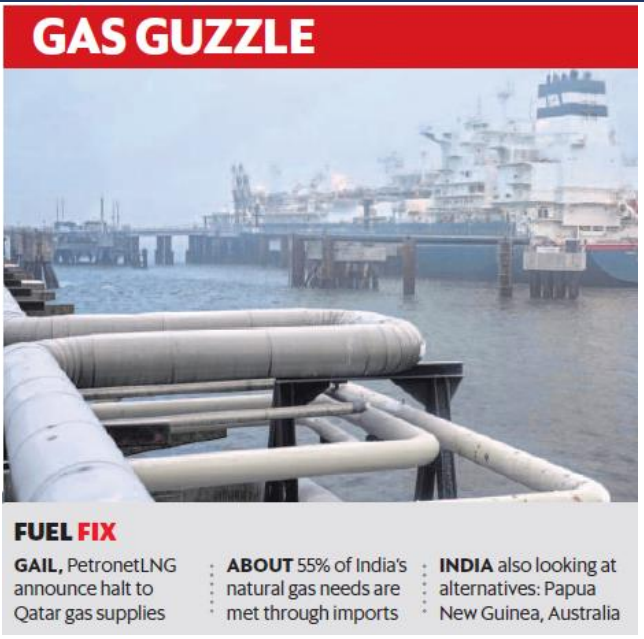
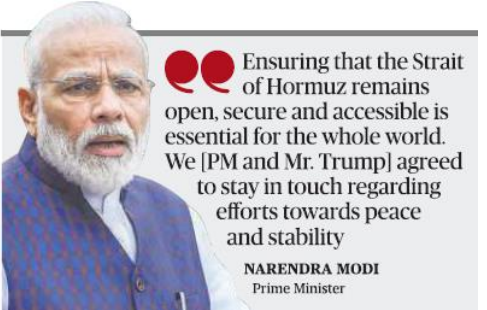
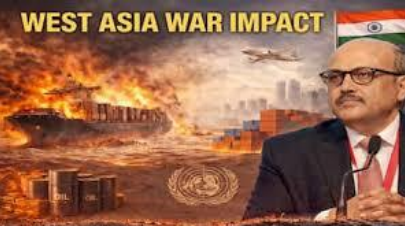
The Indian government is formulating a plan to prioritize natural gas supplies following a significant disruption in Liquefied Natural Gas (LNG) shipments from Qatar. The suspension of operations at the Ras Laffan liquefaction complex, following a drone attack on March 2, 2026, has forced major suppliers like QatarEnergy and Indian importers like Petronet LNG to invoke Force Majeure clauses. Given India’s high dependency on Middle Eastern gas, this disruption necessitates a \'rejig\' of domestic allocation to safeguard critical sectors. Key Highlights of the Gas Allocation Rejig • Supply Disruption at Source: Operations at Qatar’s Ras Laffan, the world’s largest LNG export terminal, were halted after security incidents, impacting roughly 50% of India\'s total LNG imports. • Prioritizing Critical Segments: The government is shifting supply focus toward City Gas Distribution (CGD)—which provides Piped Natural Gas (PNG) for households and Compressed Natural Gas (CNG) for transport—and the Fertilizer sector to ensure food security and daily public utility. • Impact on Non-Priority Sectors: Industries such as steel, ceramics, and gas-based power plants are likely to face significant supply cuts (estimated between 10% to 40%) as gas is diverted to higherpriority areas. • Maritime Logistics Challenges: Beyond production halts, the virtual closure of the Strait of Hormuz due to regional hostilities has prevented LNG tankers (like the Disha, Raahi, and Aseem) from reaching loading ports. • Price Volatility: With long-term contract supplies suspended, Indian entities are looking at the spot market, where prices have surged to $25/MMBtu, nearly double the typical contracted rates, threatening to increase the government\'s subsidy burden. • Diversification Efforts: In response, India is exploring alternative shipments from nations such as the USA, Australia, and Russia, while monitoring domestic inventory which typically lasts about 3 to 4 weeks for cooking gas. Constitutional & Legal Provisions • Article 39(b): Directive Principles of State Policy (DPSP) mandate that the State shall direct its policy toward ensuring that the ownership and control of the material resources of the community are so distributed as best to subserve the common good. • Essential Commodities Act, 1955: Empowers the government to control the production, supply, and distribution of essential commodities (including petroleum and its products) to maintain equitable distribution. • Force Majeure: A legal doctrine (often under Section 56 of the Indian Contract Act, 1872, regarding frustration of contract) that excuses a party from performing contractual obligations due to \'acts of God\' or \'acts of war\' that are beyond their control. Key Definitions • LNG (Liquefied Natural Gas): Natural gas (predominantly methane) that has been cooled to liquid form ($–162°C$) for ease and safety of non-pressurized storage or transport. • City Gas Distribution (CGD): A network of pipelines that supplies natural gas to domestic, commercial, and industrial consumers in a specific geographical area. • Strait of Hormuz: A strategic chokepoint between the Persian Gulf and the Gulf of Oman through which approximately 20% of global LNG and 33% of seaborne oil passes. Conclusion and UPSC Relevance The Qatar gas crisis underscores the vulnerability of India’s energy security to geopolitical instability in West Asia. While the \'reprioritization\' strategy provides a short-term buffer for households and farmers, it highlights the urgent need for India to accelerate domestic production, enhance Strategic Gas Reserves, and diversify its energy basket to reach the target of a 15% gas-based economy by 2030. UPSC Relevance: • GS Paper II: Effect of policies and politics of developed and developing countries on India’s interests; International relations (India-West Asia relations). • GS Paper III: Energy Security; Infrastructure; Mobilization of resources; Effects of liberalization on the economy. • Geography: Strategic importance of West Asian chokepoints (Strait of Hormuz).


Address : 506, 3rd EYE THREE (III), Opp. Induben Khakhrawala, Girish Cold Drink Cross Road, CG Road, Navrangpura, Ahmedabad, 380009.
Mobile : 8469231587 / 9586028957
Telephone : 079-40098991
E-mail: dics.upsc@gmail.com
Address: A-306, The Landmark, Urjanagar-1, Opp. Spicy Street, Kudasan – Por Road, Kudasan, Gandhinagar – 382421
Mobile : 9723832444 / 9723932444
E-mail: dics.gnagar@gmail.com
Address: 2nd Floor, 9 Shivali Society, L&T Circle, opp. Ratri Bazar, Karelibaugh, Vadodara, 390018
Mobile : 9725692037 / 9725692054
E-mail: dics.vadodara@gmail.com
Address: 403, Raj Victoria, Opp. Pal Walkway, Near Galaxy Circle, Pal, Surat-394510
Mobile : 8401031583 / 8401031587
E-mail: dics.surat@gmail.com
Address: 303,305 K 158 Complex Above Magson, Sindhubhavan Road Ahmedabad-380059
Mobile : 9974751177 / 8469231587
E-mail: dicssbr@gmail.com
Address: 57/17, 2nd Floor, Old Rajinder Nagar Market, Bada Bazaar Marg, Delhi-60
Mobile : 9104830862 / 9104830865
E-mail: dics.newdelhi@gmail.com