



Ahmedabad
(Head Office)Address : 506, 3rd EYE THREE (III), Opp. Induben Khakhrawala, Girish Cold Drink Cross Road, CG Road, Navrangpura, Ahmedabad, 380009.
Mobile : 8469231587 / 9586028957
Telephone : 079-40098991
E-mail: dics.upsc@gmail.com

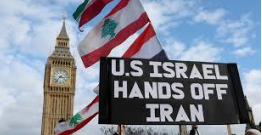
The escalation of the Iran conflict in early 2026 has fractured the traditionally unified transatlantic front, with major European powers openly challenging the U.S. administration\'s military strategy. While Germany maintains a pragmatic alignment with Washington, the United Kingdom and Spain have broken ranks, citing concerns over international law and the lack of a viable \'endgame.\' This shift marks a significant departure from the \'special relationship\' and highlights a growing divergence in security priorities, energy vulnerabilities, and domestic political pressures within the Western alliance. Key Highlights of the Diplomatic Shift • UK’s Historic Departure: For the first time in recent memory, the U.K. has refused to automatically support a major U.S. military intervention. Prime Minister Keir Starmer emphasized the need for a \'viable, thought-through plan,\' explicitly referencing the 2003 Iraq war as a cautionary tale. • Spain’s Strategic Defiance: Prime Minister Pedro Sánchez blocked the use of Spanish bases for U.S. strikes against Iran, labeling the military action as \'illegal and unwise.\' This led to a direct war of words with the White House and threats of trade reprisals. • Fragmented European Response: The continent is split between the \'Pragmatic Camp\' (led by German Chancellor Friedrich Merz), which prioritizes the U.S. security umbrella, and the \'Legalistic Camp\' (France, Spain, Ireland), which warns against violations of international law. • Energy and Security Vulnerabilities: Unlike the U.S., Europe is geographically closer to the conflict and highly susceptible to spikes in energy prices and new waves of migration, driving the urgency for an \'early end\' to hostilities. • Domestic Political Pressures: Leaders like Starmer face intense pressure from their political base and an anti-war public. Polls indicate that nearly half of the British public opposes the strikes, making \'carte blanche\' support for the U.S. politically untenable. • Realpolitik vs. Rules-Based Order: The conflict underscores a growing realization in Europe that major powers are increasingly bypassing international constraints, forcing nations like Germany to adopt a more interest-driven, realistic foreign policy. Constitutional & Legal Provisions • Article 51 of the UN Charter: Recognizes the inherent right of individual or collective self-defense if an armed attack occurs. European leaders (Spain, France) argue that the current U.S. strikes do not meet the legal threshold for \'imminent threat\' or \'proportionality.\' • Article 5 of the North Atlantic Treaty: The principle of collective defense. European nations are debating whether U.S. unilateral actions in the Middle East fall under NATO obligations or if they risk dragging the alliance into an unauthorized conflict. • The Royal Prerogative (UK): Historically allows the PM to commit troops to war without a formal vote in Parliament, though recent conventions and political pressure now demand legislative debate for significant military actions. Key Definitions • Special Relationship: A term used to describe the exceptionally close political, diplomatic, cultural, and military ties between the United Kingdom and the United States. • Rules-Based International Order: A shared commitment by sovereign states to conduct their activities according to an agreed-upon set of rules, such as international law and UN treaties. • Regime Change: The replacement of one government regime with another through external intervention, often via military force or covert operations. • Russian Roulette (Metaphor): Used by PM Sánchez to describe the high-risk nature of the conflict, implying that the U.S. is taking unnecessary chances with global stability Conclusion and UPSC Relevance The \'Iran Split\' illustrates the limits of U.S. hegemony in the 21st century and the burgeoning \'Strategic Autonomy\' of European states. For India, this fragmentation offers a complex diplomatic landscape. While New Delhi maintains its own \'strategic caution,\' the disagreement among Western allies allows India more room to maneuver its \'middle path\' diplomacy. However, the potential for global energy shocks and maritime instability remains a shared concern for both India and a divided Europe. UPSC Relevance: • GS Paper II: Bilateral, regional and global groupings and agreements involving India and/or affecting India’s interests (Transatlantic ties); Effect of policies and politics of developed countries on India\'s interests. • GS Paper III: Security challenges and their management in the Middle East; Impact of global conflicts on India’s energy security and economy. • International Relations: The evolution of the \'Global Order\' and the decline of unipolarity.


Address : 506, 3rd EYE THREE (III), Opp. Induben Khakhrawala, Girish Cold Drink Cross Road, CG Road, Navrangpura, Ahmedabad, 380009.
Mobile : 8469231587 / 9586028957
Telephone : 079-40098991
E-mail: dics.upsc@gmail.com
Address: A-306, The Landmark, Urjanagar-1, Opp. Spicy Street, Kudasan – Por Road, Kudasan, Gandhinagar – 382421
Mobile : 9723832444 / 9723932444
E-mail: dics.gnagar@gmail.com
Address: 2nd Floor, 9 Shivali Society, L&T Circle, opp. Ratri Bazar, Karelibaugh, Vadodara, 390018
Mobile : 9725692037 / 9725692054
E-mail: dics.vadodara@gmail.com
Address: 403, Raj Victoria, Opp. Pal Walkway, Near Galaxy Circle, Pal, Surat-394510
Mobile : 8401031583 / 8401031587
E-mail: dics.surat@gmail.com
Address: 303,305 K 158 Complex Above Magson, Sindhubhavan Road Ahmedabad-380059
Mobile : 9974751177 / 8469231587
E-mail: dicssbr@gmail.com
Address: 57/17, 2nd Floor, Old Rajinder Nagar Market, Bada Bazaar Marg, Delhi-60
Mobile : 9104830862 / 9104830865
E-mail: dics.newdelhi@gmail.com