





Ahmedabad
(Head Office)Address : 506, 3rd EYE THREE (III), Opp. Induben Khakhrawala, Girish Cold Drink Cross Road, CG Road, Navrangpura, Ahmedabad, 380009.
Mobile : 8469231587 / 9586028957
Telephone : 079-40098991
E-mail: dics.upsc@gmail.com

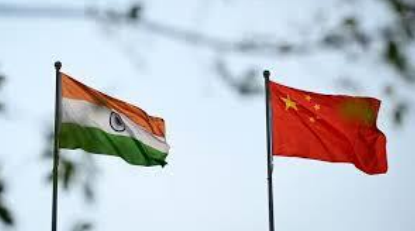
On March 10, 2026, the Union Cabinet, chaired by Prime Minister Narendra Modi, approved a significant relaxation of the Press Note 3 (2020) framework. This move signals a calibrated transition from a \'blanket restriction\' to a \'risk-based\' approach, aiming to attract minority capital and high-end technology from neighboring countries, particularly China, while maintaining rigorous national security safeguards. • Automatic Route for Minority Stakes: For the first time since 2020, investments from countries sharing a land border with India will be permitted through the automatic route, provided the beneficial ownership is non-controlling and does not exceed 10%. This aligns the FDI policy with the beneficial ownership thresholds under the Prevention of Money Laundering (PMLA) Rules. • The 60-Day Fast-Track Mechanism: To support the \'Make in India\' initiative, the government has introduced a definitive 60-day timeline for processing investment proposals in critical manufacturing sectors. These include capital goods, electronic components, polysilicon, and solar ingot-wafers—areas where India currently faces a significant technology gap. • Safeguarding \'Resident Control\': Even under the relaxed norms, the policy mandates that majority shareholding and effective control of the investee entity must remain with resident Indian citizens or Indian-owned entities at all times. This ensures that strategic decision-making power does not shift to foreign adversaries. • Focus on Global Supply Chains: The relaxation is primarily aimed at integrating India into global electronics and green energy supply chains. By allowing \'small-ticket\' Chinese investments (which were previously stalled for 6 years), Indian firms can now more easily enter into joint ventures to access niche technologies and scale up manufacturing. • Mandatory Reporting to DPIIT: While the 10% threshold bypasses prior government approval, the investee company is still required to report all relevant details of the transaction to the Department for Promotion of Industry and Internal Trade (DPIIT) to ensure continuous monitoring of capital inflows. Key Definitions • Press Note 3 (2020): A policy directive issued during the COVID-19 pandemic to prevent \'opportunistic takeovers\' of distressed Indian companies by entities from countries sharing land borders with India. • Beneficial Ownership: The natural person(s) who ultimately own or control an investment. The 2026 amendment adopts the PMLA Rules 2005 criteria to define this. • Automatic Route: An investment entry route where the foreign investor or the Indian company does not require any prior approval from the Reserve Bank of India (RBI) or the Government of India. Constitutional & Legal Provisions • Article 73: Extends the executive power of the Union to matters with respect to which Parliament has power to make laws, under which FDI policies are formulated. • FEMA (Foreign Exchange Management Act), 1999: The primary legal statute governing all foreign exchange transactions and FDI in India. • PMLA (Prevention of Money Laundering) Rules, 2005: Now used as the benchmark for identifying \'control\' and \'ownership\' in border-country investments. Conclusion The relaxation of Press Note 3 represents a \'pragmatic recalibration\' of India’s economic diplomacy. By shifting from a total block to a 10% automatic threshold, India is attempting to balance its hunger for manufacturing capital and technology with its non-negotiable national security concerns. This move is expected to particularly benefit the startup ecosystem and the electronics manufacturing sector, which have struggled with a \'funding winter\' and supply chain bottlenecks since 2020. UPSC Relevance • GS Paper II: India and its neighborhood-relations; Effect of policies and politics of developed and developing countries on India’s interests. • GS Paper III: Indian Economy and issues relating to planning, mobilization of resources, growth, development, and employment; Investment models. • Prelims Focus: Press Note 3 (2020), DPIIT, Difference between Automatic and Government routes, PMLA beneficial ownership criteria.


Address : 506, 3rd EYE THREE (III), Opp. Induben Khakhrawala, Girish Cold Drink Cross Road, CG Road, Navrangpura, Ahmedabad, 380009.
Mobile : 8469231587 / 9586028957
Telephone : 079-40098991
E-mail: dics.upsc@gmail.com
Address: A-306, The Landmark, Urjanagar-1, Opp. Spicy Street, Kudasan – Por Road, Kudasan, Gandhinagar – 382421
Mobile : 9723832444 / 9723932444
E-mail: dics.gnagar@gmail.com
Address: 2nd Floor, 9 Shivali Society, L&T Circle, opp. Ratri Bazar, Karelibaugh, Vadodara, 390018
Mobile : 9725692037 / 9725692054
E-mail: dics.vadodara@gmail.com
Address: 403, Raj Victoria, Opp. Pal Walkway, Near Galaxy Circle, Pal, Surat-394510
Mobile : 8401031583 / 8401031587
E-mail: dics.surat@gmail.com
Address: 303,305 K 158 Complex Above Magson, Sindhubhavan Road Ahmedabad-380059
Mobile : 9974751177 / 8469231587
E-mail: dicssbr@gmail.com
Address: 57/17, 2nd Floor, Old Rajinder Nagar Market, Bada Bazaar Marg, Delhi-60
Mobile : 9104830862 / 9104830865
E-mail: dics.newdelhi@gmail.com