



Ahmedabad
(Head Office)Address : 506, 3rd EYE THREE (III), Opp. Induben Khakhrawala, Girish Cold Drink Cross Road, CG Road, Navrangpura, Ahmedabad, 380009.
Mobile : 8469231587 / 9586028957
E-mail: dics.upsc@gmail.com

UPSC Relevance GS Paper II – Indian Constitution, Judiciary, Governance, and Social Sector Issues.
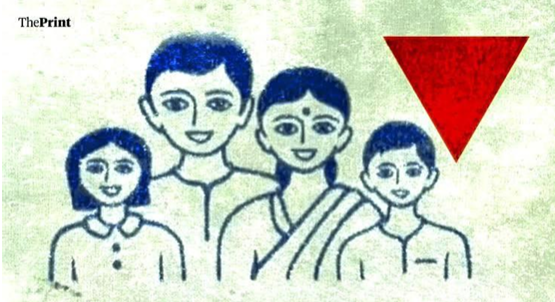
Why in News The Supreme Court observed that laws penalising individuals for having more than two children have lost relevance due to India\'s falling fertility rate, noting that its earlier 2003 judgment upholding such penal measures needs a revisit by a larger Bench.
Background
• Judicial Precedent (2003): In Javed v. State of Haryana (2003), the Supreme Court upheld state laws disqualifying individuals with more than two children from contesting local body elections
• Current Demographic Shift: India’s Total Fertility Rate (TFR) has fallen from 3.02 to 1.9, below the replacement level of 2.1 required for population stabilization.
• Demographic Projections: Persons aged 60 and above rose from 8.3% in 2014 to 9.7% in 2024, projected to hit nearly 15% by 2036.
• Trigger Case: A petition filed by Mangala Bhimrao Ingle challenging her disqualification as Sarpanch of Kakoda gram panchayat in Maharashtra for violating the two-child rule.
Impact & Measures
• Implications of Demographic Transition: Falling fertility below replacement level will shift demographic structure toward an aging population and reduce working-age workforce share.
• Injustice in Disqualification: Penalising local representatives for having over two children creates democratic exclusion and is an arbitrary abuse of power.
• Focus on Healthy Growth: Policy focus must pivot from population control/fear of overpopulation toward encouraging healthy demographic growth and social security support.
• Revisiting Disqualification Rules: Re-evaluating state municipal and Panchayat statutes (e.g., in Maharashtra, Rajasthan, Odisha) that enforce two-child disqualifications.
• Gender Disproportionate Impact: Two-child norms disproportionately marginalize women, often leading to forced abortions, desertion, or loss of political representation.
• Proactive Adaptation: Failure to adapt legal and governance frameworks to modern demographic realities risks severe socio-economic consequences.
Essential Definitions
• Total Fertility Rate (TFR): The average number of children born per woman during her reproductive years.
• Replacement Rate (2.1 TFR): The fertility rate at which a population replaces itself from one generation to the next without migration.
Legal and Constitutional Framework
• Article 21: Right to life, personal liberty, and reproductive autonomy guaranteed under the Constitution.
• Article 243K & 243O: Provisions relating to elections and qualifications/disqualifications for Panchayats.
• Judicial Reference: Request to refer Javed v. State of Haryana (2003) to a larger Supreme Court Bench for reconsideration.
Conclusion The Supreme Court observation marks a crucial shift in Indian jurisprudence, aligning population control laws with contemporary demographic data to ensure fair democratic representation and progressive social policy.


Address : 506, 3rd EYE THREE (III), Opp. Induben Khakhrawala, Girish Cold Drink Cross Road, CG Road, Navrangpura, Ahmedabad, 380009.
Mobile : 8469231587 / 9586028957
E-mail: dics.upsc@gmail.com
Address: A-306, The Landmark, Urjanagar-1, Opp. Spicy Street, Kudasan – Por Road, Kudasan, Gandhinagar – 382421
Mobile : 9723832444 / 9723932444
E-mail: dics.gnagar@gmail.com
Address: Tithi Commercial Complex, 401/402 Productivity Road, Opp. Productivity House, Alkapuri, Vadodara, Gujarat – 390007
Mobile : 9725692037 / 9725692054
E-mail: dics.vadodara@gmail.com
Address: 403, Raj Victoria, Opp. Pal Walkway, Near Galaxy Circle, Pal, Surat-394510
Mobile : 8401031583 / 8401031587
E-mail: dics.surat@gmail.com
Address: 303,305 K 158 Complex Above Magson, Sindhubhavan Road Ahmedabad-380059
Mobile : 9974751177 / 8469231587
E-mail: dicssbr@gmail.com
Address: 57/17, 2nd Floor, Old Rajinder Nagar Market, Bada Bazaar Marg, Delhi-60
Mobile : 9104830862 / 9104830865
E-mail: dics.newdelhi@gmail.com