Ahmedabad
(Head Office)Address : 506, 3rd EYE THREE (III), Opp. Induben Khakhrawala, Girish Cold Drink Cross Road, CG Road, Navrangpura, Ahmedabad, 380009.
Mobile : 8469231587 / 9586028957
E-mail: dics.upsc@gmail.com

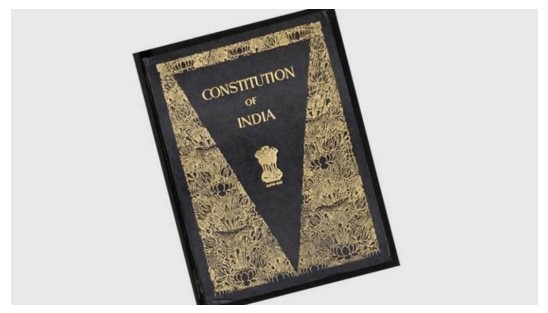
The Supreme Court recently addressed a petition seeking to redefine the legal classification of educational institutions that impart religious instruction. The Court has deferred to the Ministry of Education to determine if such schools should be categorized as religious or charitable establishments under Article 26(a) rather than secular or professional institutions under Article 30(1). This case highlights the delicate balance between religious freedom, minority rights, and the state interest in standardized secular education.
Core Summary of the Judicial Observation
• Executive Domain: The Supreme Court Bench, led by Justice Dipankar Datta, stated that the classification of schools imparting religious education falls within the administrative domain of the Ministry of Education.
• Classification Dichotomy: The petition seeks to distinguish between institutions promoting a specific religion (under Article 26) and those providing secular/professional education (under Article 30).
• Impact on Regulation: Categorizing these schools under Article 26(a) would subject them to state-imposed restrictions based on public order, health, and morality.
• Interpretation of Article 30(1): The petitioner argued that the phrase educational institutions of their choice should be interpreted strictly as secular/professional rather than religious.
• National Security & Oversight: The plea emphasized the need for a central mechanism to register and monitor institutions for children up to 14 years to prevent potential manipulation or trafficking.
• Ambiguity in Hybrid Models: Current deliberations remain unclear on how to categorize schools that offer both secular curriculum and optional religious instruction.
Key Definitions & Concepts
• Religious Instruction: Direct teaching or promotion of specific religious tenets or beliefs as part of an institutional curriculum.
• Article 26(a): Grants religious denominations the right to establish and maintain institutions for religious and charitable purposes.
• Charitable Establishments: Institutions organized for the public good rather than profit, which may include religious goals but are subject to broader state regulations.
Constitutional & Legal Provisions
• Article 19(1)(g): Guarantees the right to practice any profession or to carry on any occupation, trade, or business.
• Article 26: Freedom to manage religious affairs, specifically the right to establish and maintain institutions for religious and charitable purposes.
• Article 28: Prohibits religious instruction in educational institutions wholly maintained out of State funds.
• Article 30(1): Empowers all minorities, whether based on religion or language, to establish and administer educational institutions of their choice.
Additional Strategic Keypoints
• State Responsibility: The petition underscores the state onus to ensure the safety and security of children by preventing the operation of unrecognised and unregistered institutions.
• Quality of Education: Concerns were raised regarding whether unregistered religious institutions can provide the quality of education necessary for the nation\'s future.
• Scope of Minority Rights: The case questions whether the choice provided under Article 30 is absolute or if it can be partitioned into secular and religious segments by the state.
Conclusion
The Supreme Court decision to refer this matter to the government indicates a cautious approach toward altering the established interpretation of minority educational rights. By shifting the focus to the Ministry of Education, the Court acknowledges that the regulation of religious vs. secular curriculum is a complex policy issue involving national security and child welfare. The outcome will likely redefine how charitable purposes are viewed in the context of modern schooling, potentially bringing religious seminaries or specialized schools under stricter state oversight.
UPSC Relevance
• GS Paper II: Fundamental Rights (Articles 14-30); Protection of interests of minorities; Separation of powers between the Judiciary and Executive; Government policies and interventions.
• GS Paper IV: Ethical issues in educational institutions; Secularism vs. Communalism in the public sphere.
• Prelims: Specific clauses of Articles 19, 26, 28, and 30; Landmark judgments on minority rights and religious freedom.


Address : 506, 3rd EYE THREE (III), Opp. Induben Khakhrawala, Girish Cold Drink Cross Road, CG Road, Navrangpura, Ahmedabad, 380009.
Mobile : 8469231587 / 9586028957
E-mail: dics.upsc@gmail.com
Address: A-306, The Landmark, Urjanagar-1, Opp. Spicy Street, Kudasan – Por Road, Kudasan, Gandhinagar – 382421
Mobile : 9723832444 / 9723932444
E-mail: dics.gnagar@gmail.com
Address: 2nd Floor, 9 Shivali Society, L&T Circle, opp. Ratri Bazar, Karelibaugh, Vadodara, 390018
Mobile : 9725692037 / 9725692054
E-mail: dics.vadodara@gmail.com
Address: 403, Raj Victoria, Opp. Pal Walkway, Near Galaxy Circle, Pal, Surat-394510
Mobile : 8401031583 / 8401031587
E-mail: dics.surat@gmail.com
Address: 303,305 K 158 Complex Above Magson, Sindhubhavan Road Ahmedabad-380059
Mobile : 9974751177 / 8469231587
E-mail: dicssbr@gmail.com
Address: 57/17, 2nd Floor, Old Rajinder Nagar Market, Bada Bazaar Marg, Delhi-60
Mobile : 9104830862 / 9104830865
E-mail: dics.newdelhi@gmail.com