Ahmedabad
(Head Office)Address : 506, 3rd EYE THREE (III), Opp. Induben Khakhrawala, Girish Cold Drink Cross Road, CG Road, Navrangpura, Ahmedabad, 380009.
Mobile : 8469231587 / 9586028957
E-mail: dics.upsc@gmail.com

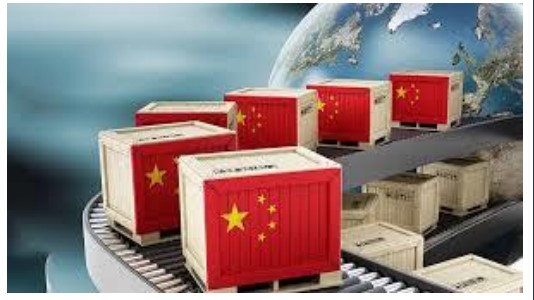
China has recently issued Decree 834, its first comprehensive regulation aimed at industrial and supply chain security. This national security-driven framework grants Chinese authorities broad discretion to scrutinize the commercial actions of multinational companies (MNCs). Accompanied by Decree 835, which targets extraterritorial regulations, this move significantly increases compliance costs and legal risks for global firms operating within the Chinese ecosystem.
Core Summary of Decree 834 and its Mechanisms
• National Security Framework: Decree 834 establishes a unified oversight system to monitor commercial actions that cause or may cause substantial harm to China industrial stability.
• Strategic Deterrence: The regulation serves as a strategic response to global de-risking and decoupling, aiming to deter MNCs from shifting manufacturing bases to competitors like India or Vietnam.
• Audit and Mapping Restrictions: The decree prevents supply chain mapping and independent audits, making it nearly impossible for firms to comply with international labor standards, such as the US Uyghur Forced Labor Prevention Act.
• Discretionary Enforcement: Experts warn that the open-ended language of the decree allows authorities to interpret almost any supply chain shift as a wrongful or harmful conduct.
• Total Manufacturing Control: Unlike other developed nations that vacated low-value production, China aims to utilize this law to maintain control over the entire manufacturing spectrum, from low-end assembly to high-tech production.
Key Definitions & Concepts
• Decree 834: China comprehensive industrial security regulation that empowers the state to penalize companies for shifting supply chains out of the country.
• China+1 Strategy: A global business strategy where MNCs diversify their manufacturing by setting up facilities in countries other than China (specifically India, Vietnam, and Thailand) to reduce geopolitical risks.
• Behavioral Deterrence: The use of regulatory threats to influence the decision-making of corporations, forcing them to maintain their status quo in China despite external economic pressures.
Constitutional & Legal Provisions
• Article 301: While this ensures freedom of trade within India, Decree 834 creates external friction that impacts India internal economic security and industrial growth.
• The Foreign Trade (Development and Regulation) Act, 1992: India primary legislation to regulate and increase exports; experts suggest this may need amendments to counter coercive foreign decrees like 834.
• EU Blocking Statute Model: A legal framework mentioned as a potential template for India, which protects domestic firms from complying with conflicting extraterritorial demands made by foreign powers.
Additional Strategic Keypoints
• Impact on Indian Manufacturers: Indian firms sourcing components from China now face a compliance trap where they cannot verify supply chain ethics due to China ban on audits.
• The Knowledge Problem: The lack of transparency mandated by the decree hinders global supply chain resilience, as mapping upstream dependencies becomes a punishable offense in China.
• Need for Indian Countermeasures: Some officials suggest India should adopt a Supply Chain Security System modeled after those in the US and China to protect India-domiciled firms from extraterritorial legal pressures.
Conclusion
China Decree 834 represents the securitization of trade, where economic dependencies are used as levers of geopolitical control. By restricting the movement of manufacturing bases and banning transparency audits, China is attempting to stall the China+1 momentum that benefits India. For India to succeed as a global manufacturing hub, it must move beyond mere incentives and establish a protective legal environment—potentially through a Blocking Statute—to shield its industries from the conflicting legal demands of global superpowers.
UPSC Relevance
• GS Paper II: Effect of policies and politics of developed and developing countries on India interests; International treaties and agreements.
• GS Paper III: Effects of liberalization on the economy; Changes in industrial policy and their effects on industrial growth; Supply chain security and indigenization.
• Prelims: Terms like China+1, Decree 834, and Extraterritoriality; Understanding of Global Value Chains (GVCs).


Address : 506, 3rd EYE THREE (III), Opp. Induben Khakhrawala, Girish Cold Drink Cross Road, CG Road, Navrangpura, Ahmedabad, 380009.
Mobile : 8469231587 / 9586028957
E-mail: dics.upsc@gmail.com
Address: A-306, The Landmark, Urjanagar-1, Opp. Spicy Street, Kudasan – Por Road, Kudasan, Gandhinagar – 382421
Mobile : 9723832444 / 9723932444
E-mail: dics.gnagar@gmail.com
Address: 2nd Floor, 9 Shivali Society, L&T Circle, opp. Ratri Bazar, Karelibaugh, Vadodara, 390018
Mobile : 9725692037 / 9725692054
E-mail: dics.vadodara@gmail.com
Address: 403, Raj Victoria, Opp. Pal Walkway, Near Galaxy Circle, Pal, Surat-394510
Mobile : 8401031583 / 8401031587
E-mail: dics.surat@gmail.com
Address: 303,305 K 158 Complex Above Magson, Sindhubhavan Road Ahmedabad-380059
Mobile : 9974751177 / 8469231587
E-mail: dicssbr@gmail.com
Address: 57/17, 2nd Floor, Old Rajinder Nagar Market, Bada Bazaar Marg, Delhi-60
Mobile : 9104830862 / 9104830865
E-mail: dics.newdelhi@gmail.com