



Ahmedabad
(Head Office)Address : 506, 3rd EYE THREE (III), Opp. Induben Khakhrawala, Girish Cold Drink Cross Road, CG Road, Navrangpura, Ahmedabad, 380009.
Mobile : 8469231587 / 9586028957
E-mail: dics.upsc@gmail.com

Key Highlights & Summary
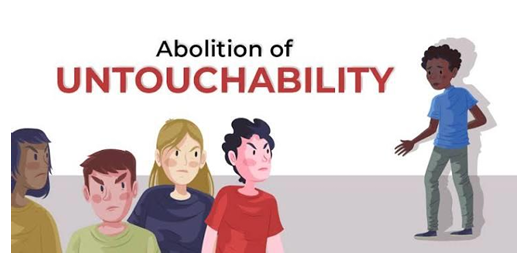
• Persistent Social Pathology: Recent incidents involving \'purification\' rituals underline how the purity-pollution paradigm and untouchability practices persist despite constitutional bans.
• Limits of Legal Mandates: While modern statutory frameworks have curbed overt, traditional forms of caste atrocities, law alone remains insufficient without an evolving social conscience.
• Rise of Reactionary Atrocities: Increased Dalit social mobility under constitutional protections has triggered new, reactionary forms of caste hostility and resentment from dominant social groups.
• Judicial and Adjudicative Constraints: Criminal law relies on a high threshold of proof (\'beyond reasonable doubt\') and is interpreted by social actors, often diminishing its deterrent impact.
• Need for Civil Remedies: Experts advocate expanding beyond punitive carceral measures toward civil law remedies, localized dispute mechanisms, and structural civil rights frameworks.
• Rebuilding Public Commons: Eradicating deep-seated caste notions requires proactive social interventions, inclusive urban planning, non-segregated public infrastructure, and updated educational curricula.
Essential Definitions
• Untouchability: A historical social practice of discriminating against and ostracizing specific caste groups based on notions of ritual purity and pollution.
• Carceral Feminism/Jurisprudence: An approach relying primarily on severe criminal penalization and imprisonment to address complex social, gender, or structural crimes.
• Purity-Pollution Paradigm: The hierarchical social framework that categorizes individuals and physical spaces as clean or contaminated based on hereditary caste identity.
• Legal Consciousness: The way individuals and communities perceive, experience, and interact with formal legal structures in their everyday lives.
Legal and Constitutional Framework
• Article 17 (Constitution of India): Abolishes \'Untouchability\' in any form, making its practice an offense punishable in accordance with law.
• Article 15 (Constitution of India): Prohibits state discrimination on grounds of religion, race, caste, sex, or place of birth, and guarantees equal access to public places.
• Protection of Civil Rights Act, 1955: Enacted under Article 35 of the Constitution to prescribe penalties for practicing untouchability and enforcing social disabilities.
• Scheduled Castes and Scheduled Tribes (Prevention of Atrocities) Act, 1989: Comprehensive statutory measure designed to prevent crimes against SC/ST members and establish Special Courts for trial.
Conclusion Relying solely on punitive criminal statutes cannot eliminate caste-based discrimination, as deeprooted social notions persist beyond the formal reach of law. Combating untouchability requires supplementing formal legal protections with civil remedies, community-level dispute resolution, and systemic reforms in urban planning and public education.
UPSC Relevance
• GS Paper I: Indian Society—Salient features of Indian Society, Diversity of India; Social empowerment, communalism, regionalism, and secularism; Role of women and social movements.
• GS Paper II: Constitution of India—fundamental rights and constitutional mechanisms; Government policies and interventions for the development of vulnerable sections; Statutory and regulatory bodies dealing with human rights.


Address : 506, 3rd EYE THREE (III), Opp. Induben Khakhrawala, Girish Cold Drink Cross Road, CG Road, Navrangpura, Ahmedabad, 380009.
Mobile : 8469231587 / 9586028957
E-mail: dics.upsc@gmail.com
Address: A-306, The Landmark, Urjanagar-1, Opp. Spicy Street, Kudasan – Por Road, Kudasan, Gandhinagar – 382421
Mobile : 9723832444 / 9723932444
E-mail: dics.gnagar@gmail.com
Address: Tithi Commercial Complex, 401/402 Productivity Road, Opp. Productivity House, Alkapuri, Vadodara, Gujarat – 390007
Mobile : 9725692037 / 9725692054
E-mail: dics.vadodara@gmail.com
Address: 403, Raj Victoria, Opp. Pal Walkway, Near Galaxy Circle, Pal, Surat-394510
Mobile : 8401031583 / 8401031587
E-mail: dics.surat@gmail.com
Address: 303,305 K 158 Complex Above Magson, Sindhubhavan Road Ahmedabad-380059
Mobile : 9974751177 / 8469231587
E-mail: dicssbr@gmail.com
Address: 57/17, 2nd Floor, Old Rajinder Nagar Market, Bada Bazaar Marg, Delhi-60
Mobile : 9104830862 / 9104830865
E-mail: dics.newdelhi@gmail.com