

Ahmedabad
(Head Office)Address : 506, 3rd EYE THREE (III), Opp. Induben Khakhrawala, Girish Cold Drink Cross Road, CG Road, Navrangpura, Ahmedabad, 380009.
Mobile : 8469231587 / 9586028957
E-mail: dics.upsc@gmail.com
Key Highlights & Summary
• 10-Year Milestone: Adopted in Rwanda on October 15, 2016, the Kigali Amendment to the Montreal Protocol aims to phase down hydrofluorocarbons (HFCs), potent greenhouse gases used in refrigeration and air conditioning.
• Global Climate Impact: Full implementation of the amendment is projected to prevent up to 0.5°C of global warming by the year 2100, aligning with the Paris Agreement goal to limit warming well below 2°C.
• India’s Phase-down Roadmap: Having ratified the amendment in 2021, India must freeze its HFC production and consumption by 2028, achieve a 10% reduction below baseline by 2032, and reach an 85% cut by 2047.
• Surging Cooling Demand: According to the IEA, cooling accounts for over 10% of India\'s total electricity demand (rising up to 33% on summer nights), with national cooling demand projected to more than double by 2035.
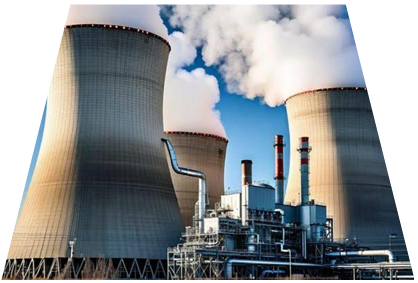
• Dual Emissions Mechanism: Cooling contributes to climate change via direct emissions (HFC refrigerant leakage) and indirect emissions (electricity generated from fossil fuels to run appliances).
• Financial and Technological Support: The Multilateral Fund (MLF) assists developing nations like India with incremental compliance costs, factory technological overhauls, and workforce training.
Essential Definitions
• Hydrofluorocarbons (HFCs): Synthetic organic compounds containing hydrogen, fluorine, and carbon atoms, serving as non-ozone-depleting alternatives to CFCs but possessing high global warming potential.
• Short-Lived Climate Pollutants (SLCPs): Powerful climate warmers—including HFCs, methane, black carbon, and tropospheric ozone—that remain in the atmosphere for shorter periods than carbon dioxide but have significant warming impacts.
• Global Warming Potential (GWP): A relative measure of how much heat a greenhouse gas traps in the atmosphere compared to carbon dioxide over a specific time horizon.
Legal and Constitutional Framework
• Montreal Protocol on Substances that Deplete the Ozone Layer (1987): International environmental treaty under which the Kigali Amendment operates as a legally binding framework for phasing down HFCs.
• Ozone Depleting Substances (Regulation and Control) Rules, 2000: Statutory rules framed under India Environment (Protection) Act, 1986, to regulate production, import, export, and consumption of ozonedepleting substances and fluorinated gases.
• India Cooling Action Plan (ICAP): National policy framework aimed at reducing cooling demand across sectors by 20% to 25% and refrigerant demand by 25% to 30% by 2037–38.
• Article 48A of the Constitution: Mandates the State to protect and improve the environment and safeguard the national ecology.
• Article 21 of the Constitution: Guarantees the fundamental right to life, which incorporates the right to a clean and sustainable environment free from catastrophic climate impacts.
Conclusion
The 10th anniversary of the Kigali Amendment highlights the crucial need to balance rising cooling needs with climate mitigation. For India, pairing low-GWP refrigerants with enhanced appliance energy efficiency is essential for achieving domestic cooling goals while fulfilling international climate obligations.
UPSC Relevance
• Syllabus Connection: GS Paper-III (Conservation, Environmental Pollution and Degradation, Environmental Impact Assessment, International Treaties).
• Prelims Takeaway: Kigali Amendment targets for Group 2 countries (India’s 2028 freeze year, 2047 reduction timeline), distinction between Ozone Depleting Substances (CFCs/HCFCs) and HFCs, and SLCP characteristics.


Address : 506, 3rd EYE THREE (III), Opp. Induben Khakhrawala, Girish Cold Drink Cross Road, CG Road, Navrangpura, Ahmedabad, 380009.
Mobile : 8469231587 / 9586028957
E-mail: dics.upsc@gmail.com
Address: A-306, The Landmark, Urjanagar-1, Opp. Spicy Street, Kudasan – Por Road, Kudasan, Gandhinagar – 382421
Mobile : 9723832444 / 9723932444
E-mail: dics.gnagar@gmail.com
Address: Tithi Commercial Complex, 401/402 Productivity Road, Opp. Productivity House, Alkapuri, Vadodara, Gujarat – 390007
Mobile : 9725692037 / 9725692054
E-mail: dics.vadodara@gmail.com
Address: 403, Raj Victoria, Opp. Pal Walkway, Near Galaxy Circle, Pal, Surat-394510
Mobile : 8401031583 / 8401031587
E-mail: dics.surat@gmail.com
Address: 303,305 K 158 Complex Above Magson, Sindhubhavan Road Ahmedabad-380059
Mobile : 9974751177 / 8469231587
E-mail: dicssbr@gmail.com
Address: 57/17, 2nd Floor, Old Rajinder Nagar Market, Bada Bazaar Marg, Delhi-60
Mobile : 9104830862 / 9104830865
E-mail: dics.newdelhi@gmail.com